 Skip to content


Services / Certification of aeronautical systems
Certification of aeronautical systems: plans, analyses, tests and certification reports
Plans, analyses and compliance reports against ANAC, FAA and EASA airworthiness requirements. We issue the certification documents ourselves; you review them and submit them to the authority.
Experience in all phases of the certification process of air conditioning and pressurization (ATA 21), ice and rain protection (ATA 30) and pneumatic systems (ATA 36), with ANAC, FAA, EASA, JCAB and Transport Canada. Some of our members worked for years as professionals accredited by ANAC to issue technical opinions on compliance.
Examples
Select an image to see each example.
Certification track record
- Akaer, ASOJ TA, 2020 to 2024ECS, supplemental cooling and ice protection: design, laboratory, ground and flight tests, and certification reports.
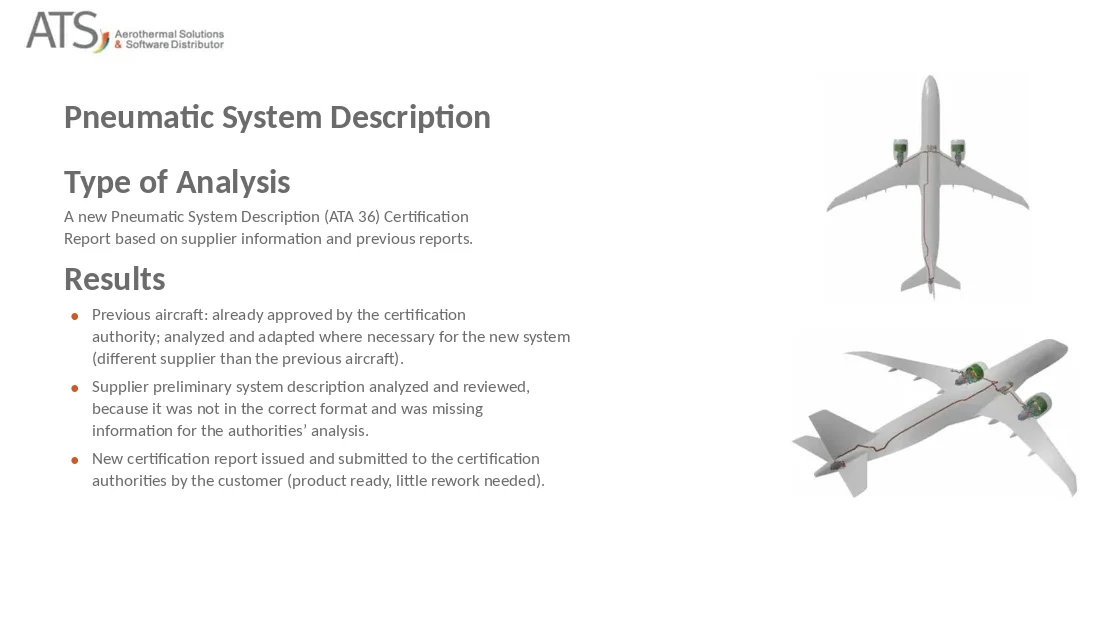
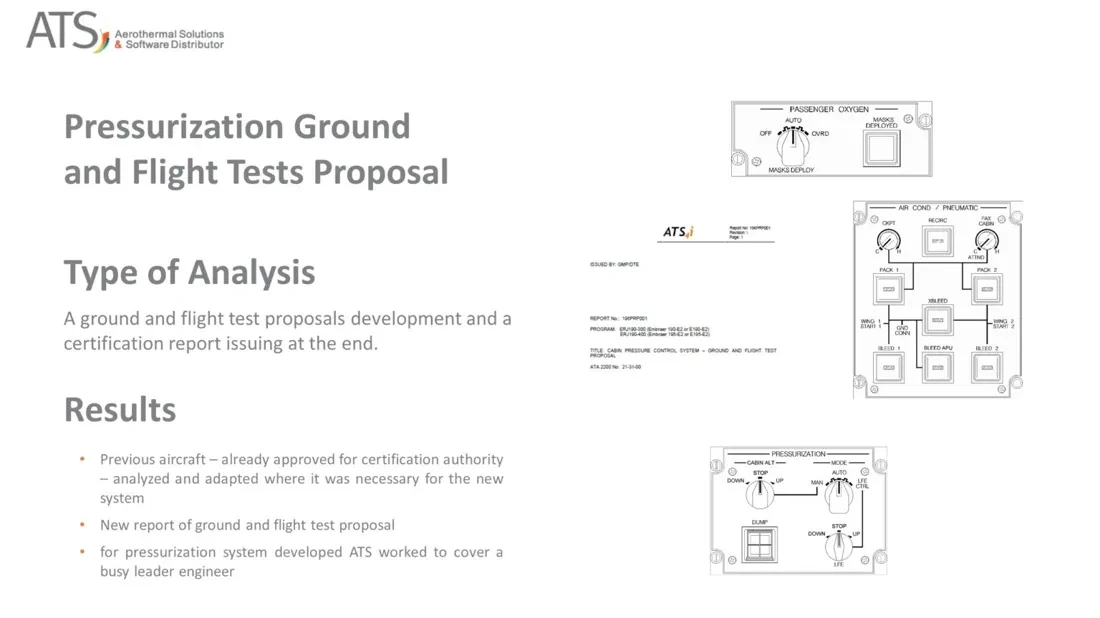
- Embraer E2, 2014 to 2018Pneumatic system: design, system description (ATA 36), component qualification, ground and flight test proposals and certification reports submitted by the customer.
- ATA 21, 30 and 36Certification work accepted by ANAC, FAA, EASA, JCAB and Transport Canada.
- Embraer, 1997 to 2007Design and certification of wing and air data probe ice protection, E190 pneumatic, ECS and icing certification.
- Smart probes, Embraer 170/190, 2003 to 2004Certification after an EASA CRI, with conditions that reached TSO-C16b more than a decade later.
- eVTOL certification supportAir data probe icing (Joby) and 2D ice shapes following EUROCAE ED-314 (Vertical).
- SAE AC-9CATS is the liaison to the aircraft icing technology committee, with frequent contact with the authorities.
Complete packages, from requirements to certification reports
We prefer whole, long-term programs to isolated tasks: ATS responsible for design support, tests and the certification documents.
What a package covers
Certification plan and means of compliance (MOC), system description, system safety assessment with FMEA and fault tree analysis, test plans and test results, analysis model and analysis results, and the component qualification matrix. We issue these documents ourselves, from analysis or test results. You review them and submit them to the authorities. This is our differentiator.
One team for the whole program
At least one associate senior engineer stays assigned from the first requirement to the last report, so decisions, test points and evidence stay consistent. When needed, an engineer works full time on site with your team.
An example: Akaer, ASOJ TA
2020 to 2024. A four-year complete package outsourced by Akaer to ATS for supply to Turkish Aerospace: ECS modification of the Global 6000 for the surveillance variant per 14 CFR Part 25, a supplemental liquid cooling system designed from scratch, ice protection, laboratory, ground and flight tests, and all certification reports ready for submission.
Need only a part? We define the scope with you.
What you receive
Certification basis and means of compliance
Applicable requirements for the system and how each one will be shown.
System description
A certification report in the format the authority expects, as we did for a new pneumatic system (ATA 36).
Safety assessment inputs
System and component failure analysis used in the safety assessment.
Certification plan and test proposals
Ground and flight test proposals, and the report at the end of the campaign.
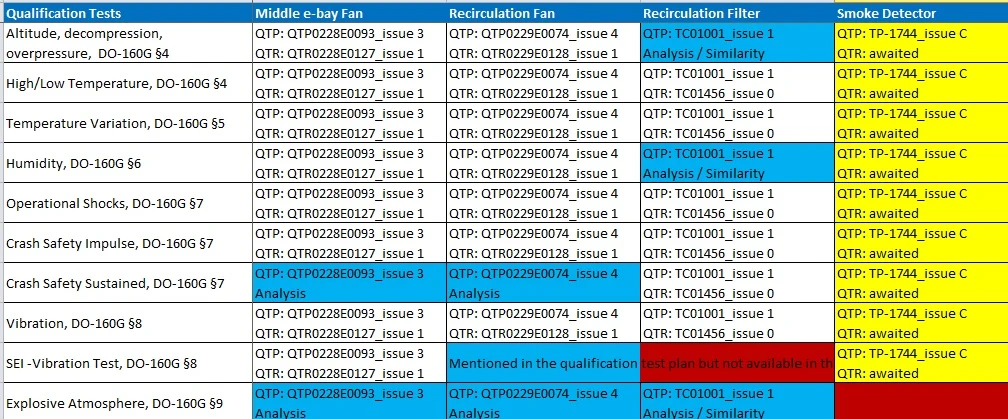
Component qualification review
Requirements cross-checked against each supplier test proposal and result, so no part or requirement is left behind.
Compliance reports from analysis
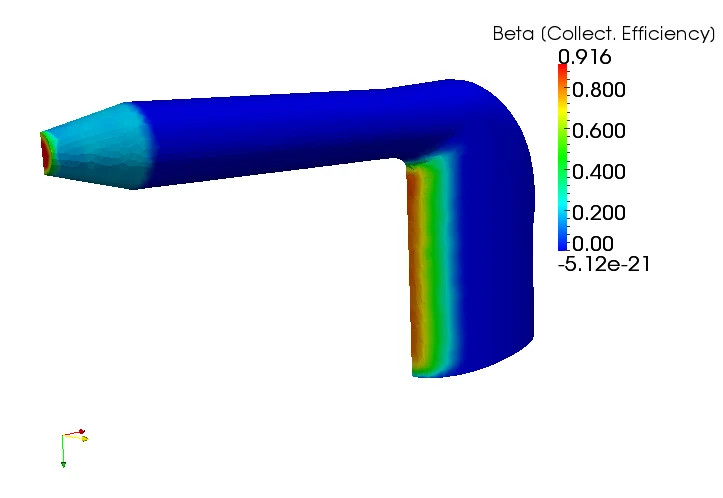
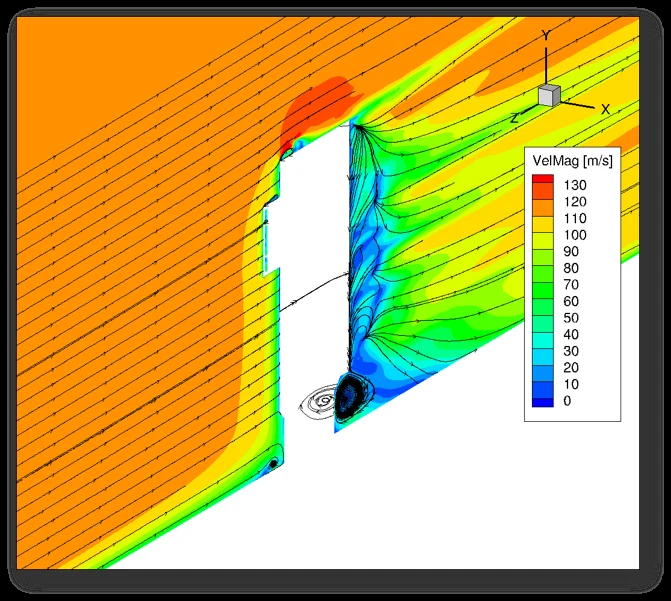
CFD, FEA and system models (AMESim, FloMaster) documented as evidence.
Certification of aeronautical systems
Ensuring aeronautical safety
The certification of aeronautical systems and an aircraft aims to ensure that the aircraft and its systems, which are highly integrated, fulfill the functions for which they were properly and safely designed. The technical requirements applicable to an aircraft and its systems are presented in a wide set of technical requirements established by the aeronautical authorities of each country (ANAC-Brasil, FAA-USA among others) or that represent a group of countries, in the case of EASA for countries belonging to the European Union.
This technical requirements base is dynamic and is being revised due to the development of technology, new types of aeronautical products and the need to address the safety of aircraft and systems. An aircraft and its systems are considered fit for operation when the demonstration of the applicable technical requirements, performed by the entity responsible for the aircraft, are accepted by the aeronautical authority.
The certification process starts in the preliminary phases
The certification process starts from the preliminary phases of the development of the aircraft and its systems and has as main phases: establishing the certification basis, its requirements and respective modes of compliance; demonstration of compliance with requirements through technical project data, analysis (including safety assessment analysis), tests, inspections, simulations and equipment qualification; and issuance of the aircraft type certificate.
Tools, and where each one fits
Tools serve the engineering work. We say what each one does in the project.
| Tool | Role in the project | Status |
|---|---|---|
| CFD++ | Flow, heat transfer and droplet impingement analyses used as compliance evidence. | Licensed |
| AMESim, FloMaster | System models of ECS, pneumatic and cooling networks, steady and transient. | Client license |
| Femap, NX Nastran, Adina | Stress and thermal analysis of ducts and structures, including an FEA model delivered for the manufacturer's use. | Licensed |
| MATLAB | Envelope, mission and test point tools, such as air data probe envelopes and icing critical conditions. Run with the client's license. | Client license |
| Python, Nsp, Scilab | Envelope, mission and test point tools, such as air data probe envelopes and icing critical conditions. Python, Nsp and Scilab need no license and replace MATLAB when the client does not provide one. | In use |
| Excel/VBA | Envelope, mission and test point tools, such as air data probe envelopes and icing critical conditions. | Licensed |
Evidence you can check
Client and Embraer project work.
Project work
| Project | What we did | Tools and tests | Result or venue |
|---|---|---|---|
| Akaer, ASOJ TA: ECS modsProject | Redesign of the Global 6000 ECS for the surveillance variant. | Ducting and routing per 14 CFR Part 25. Laboratory, ground and flight tests. | Four-year program. Certification reports ready for submission. |
| Akaer, ASOJ TA: supplemental coolingProject | Liquid cooling system for the mission equipment, designed from scratch. | Architecture definition. Laboratory, ground and flight tests. | System designed, tested and documented for certification. |
| Embraer E2, 2014 to 2018: pneumatic system description (ATA 36)Project | New system description certification report for a new supplier pneumatic system. | Previous approved aircraft analyzed and adapted. Supplier description reviewed for missing information. | Report issued and submitted to the authorities by the customer, with low rework. |
| Embraer E2, 2014 to 2018: pressurization ground and flight test proposalProject | Ground and flight test proposals for the pressurization system, and the certification report at the end. | Previous approved aircraft analyzed and adapted for the new system. | New test proposal report, covering a busy lead engineer. |
| Embraer E2, 2014 to 2018: components qualification (air management)Project | Certification requirements cross-checked with each test proposal and result. | Valves, sensors, packs and computers. Questions and revisions requested from suppliers. | Process delivered to the customer. Full-time engineer on site. |
| Embraer E2, 2014 to 2018: pneumatic system designProject | Pneumatic system design and analysis, leak detection design, certification reports developed and reviewed. | Validated thermal model. Dedicated FEA model. | Model used by the manufacturer. Reports used in the safety assessment. |
| Joby (eVTOL), 2023 to 2024Project | Air data probe icing certification for cruise during the escape from icing. | 3D CFD water catch and heat load mapping. Icing tunnel test planning. | Support to test planning and certification. |
| Vertical (eVTOL), 2025Project | 2D ice shapes on wings and stabilizers for inadvertent icing and escape. | LEWINT, following EUROCAE ED-314. | Complete report ready for submission to the authority. |
| Embraer: smart probesIndustry | Smart probe certification for the E170/190 in response to an EASA CRI. | Intensive use of simulation with CFD++. | Certified in 2003 to 2004, with conditions that reached TSO-C16b more than a decade later. |
| Embraer 190: pneumatic, ECS and icingIndustry | Pneumatic system, ECS and icing certification. | Icing tunnel and flight test campaigns. | Certification reports issued. |
Recommendation letter from Embraer
Embraer recommends ATS for engineering and certification work. The letter is available on request.
Authorities and requirements we work with
- AuthoritiesANAC, FAA, EASA, JCAB, Transport Canada and CAA (UK).
- Aircraft requirements14 CFR Part 25 and Part 23, CS-25 and their equivalents at ANAC.
- SystemsATA 21 air conditioning and pressurization, ATA 30 ice and rain protection, ATA 36 pneumatic.
- Components and icingCertification of the ice protection systems of pitot and pitot-static probes, TAT probes, AoA probes, static ports and smart probes: TSO/ETSO-C16 and SAE AS5562 for pitot and pitot-static probes, FAR 25 Appendices C and O, EUROCAE ED-314 for eVTOL. Component qualification to RTCA DO-160.
Contact with the authorities
Frequent contact with the authorities in the SAE AC-9C committee and in dedicated ATS and FAA meetings, where we present issues and solutions, including CFD, ice protection and ice shapes. Contacts with ANAC, EASA, CAA and Transport Canada are also frequent.
Recognized as a reliable interlocutor
Our experience comes from development and certification of civil and military aircraft with a track record of operational safety on five continents. Currently we support an eVTOL program, developing the system architecture against its certification basis.
How an engagement runs
Preliminary requirements base
Certification basis, applicable requirements and means of compliance.
Studies and base project
Architecture and design studies, reviewed at the preliminary design review.
Final requirements and detailing
Final requirements base and detailed design, reviewed at the critical design review.
Analysis, tests and qualification
Performance and failure analyses, test proposals, component qualification.
Compliance with requirements
Certification reports issued by ATS, reviewed and submitted by you.
Start of operation
Maintenance and operation support, service difficulties and follow-up.
Related services
Questions engineers ask before they hire us
Which certification documents do you issue?
We issue the documents the program needs, from analysis or test results: certification plan, means of compliance (MOC), system description, system safety assessment with FMEA and fault tree analysis, test plans and test results, analysis model and analysis results, and the qualification matrix. You review them and submit them to the authority.
Who submits the documents to the authority?
You do. The applicant or design organization holds the certification and submits the evidence. We work inside your process and deliver documents ready for submission.
Which systems and authorities do you cover?
Air conditioning and pressurization (ATA 21), ice and rain protection (ATA 30) and pneumatic systems (ATA 36), with ANAC, FAA, EASA, JCAB and Transport Canada, on civil, military and eVTOL programs.
Can simulation be part of the means of compliance?
Yes, as analysis evidence, when the model is validated and its use is agreed in the certification plan. Simulation also reduces the number of test points, and tests confirm the points that matter.
Can you work on site with our team?
Yes. On component qualification for an air management system, an ATS engineer worked full time on site to keep the interface with suppliers smooth.
Is our data kept confidential?
Yes. We work under NDA, and your design data and reports stay with you.
Tell us about the system and the certification stage
Send the aircraft, the system and the question you need answered.
Email
aerospace@aerothermalsolutions.coPhone
+55 11 3854-4224OfficeAv. Pompéia, 634, cj. 107, São Paulo, SP, Brazil.
An ATS engineer replies. We work under NDA.